
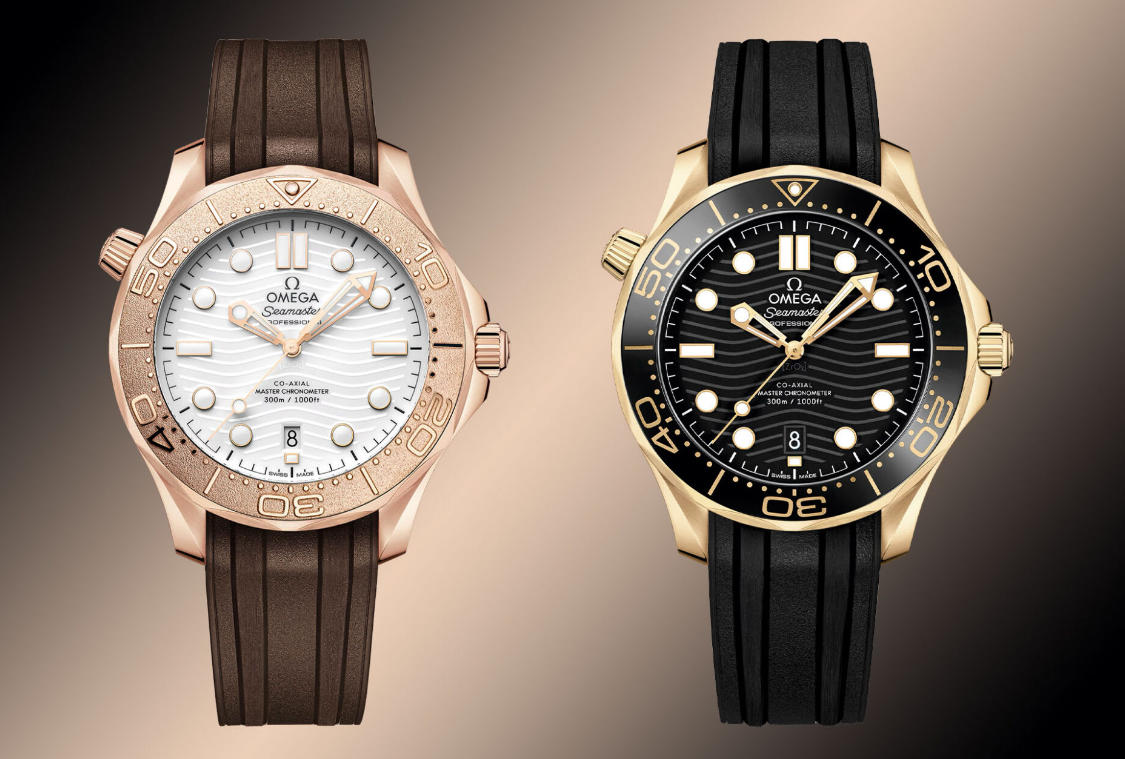
The Omega Seamaster Diver 300M is best known for its stainless steel cases, ceramic bezels and familiar wave-patterned dials. The full-gold Moonshine and Sedna Gold references take that established design in a different direction without changing what makes the watch recognisable. Both retain the proportions and practical features of the Diver 300M, but their contrasting metals, dials and straps give them noticeably different personalities.
The distinction is more interesting than a simple choice between yellow and rose gold. The Sedna Gold reference, 210.52.42.20.04.001, combines an 18K rose-gold case with a white ceramic dial and brown rubber strap. The Moonshine Gold reference, 210.62.42.20.01.003, uses Omega’s paler yellow-gold alloy with a black ceramic dial, black bezel and black rubber strap. The first is softer in appearance, while the second stays closer to the familiar black-and-gold Seamaster combination.
For readers interested in replica watches UK, these models offer a particularly useful comparison. Their overall case design is similar, but the differences in surface finishing, bezel construction and colour are substantial. They also show why reproducing the general shape of a watch is not enough to capture the character of a particular reference.
Two Different Interpretations of the Gold Seamaster
The Sedna Gold version is the more unusual of the pair. Omega’s proprietary 18K Sedna Gold alloy gives the case a warm rose-gold colour, which works particularly well with the polished white ceramic dial. The familiar wave pattern remains, but the lighter surface changes the way the applied gold hands and hour markers stand out. Instead of the strong contrast found on the black version, the dial has a quieter appearance.
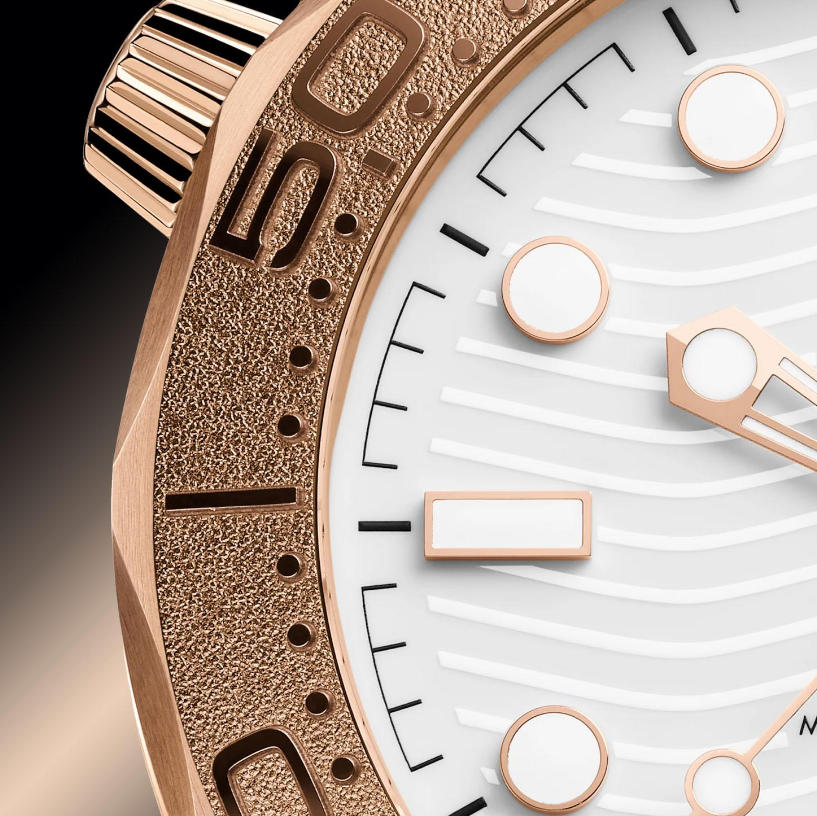
Its bezel is also quite different. Rather than using a black ceramic insert, Omega has continued the gold construction and added a raised 60-minute diving scale over a textured background. The relief markings give the surface more depth and prevent the bezel from looking like a simple polished gold ring. A brown rubber strap and matching Sedna Gold pin buckle complete the design, keeping the overall colour combination warm without making the watch look overly formal.
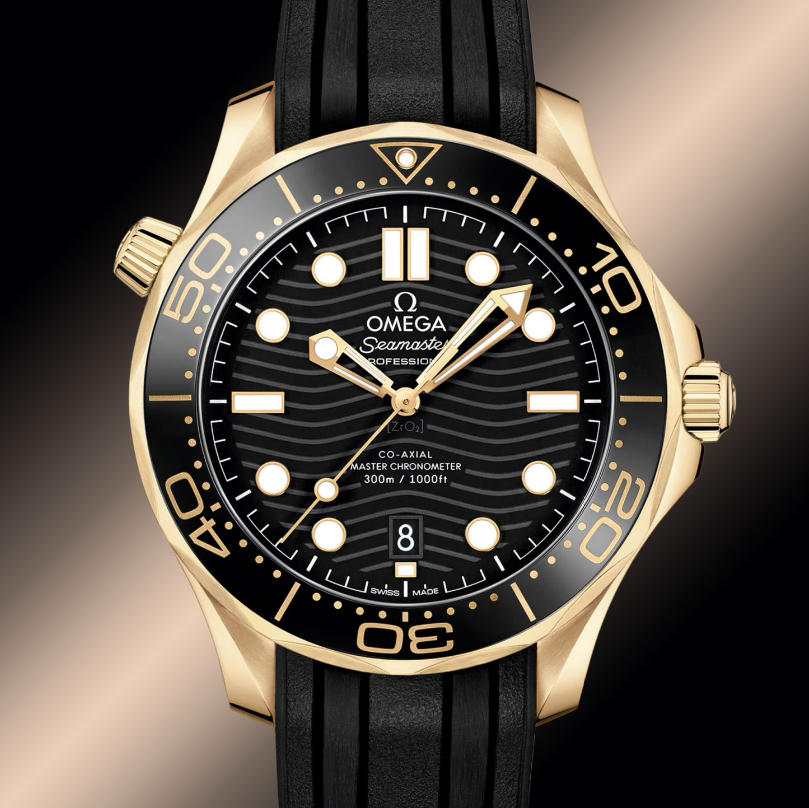
The Moonshine Gold model takes a more familiar approach. Its 18K case is paired with a polished black ceramic dial featuring the laser-engraved wave pattern that has defined this generation of the Seamaster since 2018. The black ceramic bezel uses a Ceragold diving scale, while the gold skeleton hands and applied hour markers provide a clear contrast against the dark background. A black rubber strap keeps the watch firmly within the sports-watch character of the collection.
Moonshine Gold is not quite the same colour as conventional yellow gold. Omega developed the alloy to produce a paler yellow tone, giving it a more restrained appearance. Against black ceramic, this difference is particularly noticeable. The gold adds warmth without overpowering the dial, and the result feels more closely connected to the established Seamaster design than the white-and-rose-gold combination.
I find the Sedna version more distinctive, mainly because of its white dial and textured gold bezel. The Moonshine version, however, has the stronger connection with the familiar Diver 300M appearance. Neither needs additional decoration to make its point. Omega has kept the same basic architecture and allowed the materials to create two separate identities.
The 42mm Case, Calibre 8801 and Details That Matter
Both watches retain the 42mm stainless-steel-era proportions of the modern Diver 300M, although their cases are made entirely from their respective 18K gold alloys. They measure approximately 13.72mm thick, with a lug-to-lug length of 49.93mm. The curved lyre-shaped lugs, broad rotating bezel and helium escape valve at ten o’clock remain familiar features. Water resistance is rated at 300 metres, supported by the screw-in crown and unidirectional bezel.
The date window sits at six o’clock, preserving the layout of this generation of the collection. It is a small detail, but it helps keep the dial balanced. On the white Sedna model, the date display blends into the lighter ceramic surface. On the black Moonshine version, it remains part of the darker arrangement rather than interrupting the dial with a contrasting feature.
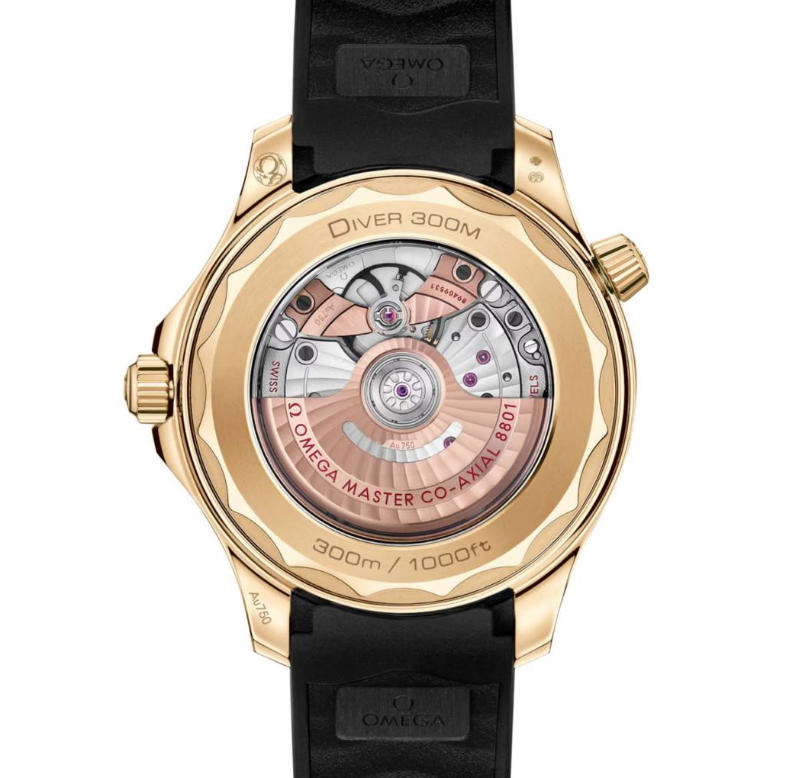
Inside both references is Omega’s automatic Co-Axial Master Chronometer calibre 8801. It is closely related to the 8800 used in steel models, but the 8801 adds gold components to the movement, including its balance bridge and oscillating weight. The movement runs at 25,200 vibrations per hour and provides 55 hours of power reserve. It also carries METAS Master Chronometer certification and resistance to magnetic fields of up to 15,000 gauss.
The sapphire exhibition case back allows the movement to be seen, making the gold components part of the watch’s presentation rather than something hidden from view. This is a sensible choice for two expensive gold references. The movement continues the material theme of the exterior while retaining the mechanical construction and testing standards associated with Omega’s Master Chronometer models.
These details also provide more useful points of comparison when looking at replica interpretations. A Moonshine Gold Omega Seamaster with black ceramic dial needs to get the pale gold tone, bezel markings and wave pattern right. The Sedna version requires a different balance, particularly around the white ceramic dial and textured rose-gold bezel. Simply changing the case colour while keeping the same bezel and dial arrangement does not reproduce both references accurately.
Case proportions deserve equal attention. A watch advertised as 42mm can still look noticeably different if the lugs are too long, the bezel is too thick or the case profile is incorrectly shaped. The Omega Seamaster Diver 300M 42mm case design depends on the relationship between the rounded case, curved lugs and broad bezel. These elements need to work together for the watch to retain its familiar appearance.
The movement is another area where visual similarity should not be confused with mechanical equivalence. A replica with a decorated rotor does not automatically contain the genuine 8801 calibre or share its Co-Axial escapement, Master Chronometer certification and magnetic resistance. The original model’s 55-hour power reserve and 300-metre water-resistance rating should not be attributed to another watch without independent evidence and testing.
The rubber straps are also more important than they might first appear. Brown gives the Sedna Gold version a softer finish, while black makes the Moonshine model look more purposeful. Their connection to the case, taper and buckle finishing all influence the overall proportions. On these watches, the strap is part of the design rather than an interchangeable afterthought.
Readers interested in other models from the collection can find further comparisons in our Omega Seamaster replica watches section. The different generations are worth examining together because Omega has retained some familiar features while changing the materials and overall design direction of individual references.
Ultimately, the appeal of these two gold Seamaster Diver 300M models comes from how differently they interpret the same watch. Sedna Gold makes the collection feel warmer and more refined, while Moonshine Gold preserves a stronger connection with its traditional black-and-gold sports-watch appearance. Both retain the familiar case, diving functions and automatic movement that define the range.
The gold is what attracts attention, but the more interesting details are found in the bezel, ceramic dial, case proportions and movement finishing. Omega has not needed to redesign the Diver 300M to give these references a separate identity. It has simply changed the materials and allowed the original design to work in two different ways.
 admin